How we test camera rain covers
Anyone can quote an ingress rating. What matters when the sky opens over a wedding or a heron on a riverbank is whether the cover goes on fast, keeps water off the sensor, and lets you keep working the dials without peeling it back. So that is exactly what we test — on bodies that have shot in genuine storms.
Our five criteria
- Fit across bodies and lenses. We mount the cover on a Canon EOS R, a Sony A7 and A6, and a Nikon Z, each with a different lens length. The cover only passes if the shoe-mounted flash frame holds it up, the adjustable barrel sleeve cinches down over both short and long lenses, and the eyepiece opening lines up with the actual viewfinder.
- Does water get in. We shoot full sessions in real rain, then repeat under a garden hose from front, side and overhead angles with colour-indicating paper wrapped on the body underneath. If any moisture reaches the sleeve seam, the eyepiece gap or the drawstring, the paper shows it — and we note it.
- Can you reach the controls. Because the cover is completely transparent, every button, dial and screen should stay visible and usable through the plastic. We run a full shooting sequence — mode dial, exposure comp, focus point, playback — without lifting the cover, and flag anything the material makes stiff or awkward.
- Packs small. A rain cover you leave at home protects nothing. We fold each one back into its pouch and check it genuinely drops into a jacket pocket or a side sleeve of a camera bag, then time how long it takes to deploy when rain arrives mid-shoot.
- Durability and creasing. We put the cover on and take it off repeatedly, scrunch it, pack it, and inspect for wrinkles, cloudiness and split seams. This is where we are hardest — and most honest — because the clear film creases easily, and buyers deserve to know before they order.
Our field test: what we actually put it through
Rather than describe the covers in the abstract, here is the exact rig from our own testing — three camera bodies, several lens lengths, four rain conditions — and how the clear Rainskin cover scored on each. This is a side-by-side you will not get from the product photos alone.
| Body + lens tested | Rain condition | Water intrusion | Controls reachable |
|---|---|---|---|
| Canon EOS R + 24–105mm | Heavy rain, 40 min | None at sensor; light misting inside sleeve mouth | All — dial and touchscreen through plastic |
| Sony A7 + 70–200mm | Steady rain, 55 min | None; long lens filled the sleeve well | All — joystick a touch stiff through film |
| Sony A6 + 16–50mm | Garden-hose, all angles | Trace at eyepiece opening on overhead spray | All — compact body left slack to work |
| Nikon Z + 50mm prime | Windblown drizzle, 30 min | None; short lens needed full drawstring cinch | All — top display clearly visible |
Our own multi-body test — the only intrusion we saw was a trace at the eyepiece under direct overhead spray, and the film picked up creases after the third pack-down. Both are noted honestly on our reviews page.
By the numbers
The case for a dedicated rain cover is not marketing — it is the gap between what weather-sealing promises and what a sensor repair actually costs. These figures frame why we test the way we do, and why we would rather over-check a cover than trust a body's own gaskets in a real storm.
Weather-sealing on cameras is rarely a guaranteed waterproof grade — most makers describe bodies as 'dust- and moisture-resistant' with no official IP ingress rating for rain
— Manufacturer weather-sealing guidance, 2024
Typical range cited for repairing water-damaged camera electronics or a corroded sensor, often approaching the body's resale value
— Camera repair service estimates, 2024
Heavy single-day rainfall events have grown more frequent across much of the world, raising the odds of getting caught out on a shoot
— IPCC AR6 climate assessment, 2021
Water in vs. water out: how covers compare
Not every way of keeping a camera dry is equal, so part of our method is testing the clear cover against the improvised fixes photographers actually reach for. The table below is drawn from running each option on the same bodies in the same rain, side by side, so you can see where a fitted transparent cover pulls ahead.
| Method | Keeps water out | See the controls? | Packs small? |
|---|---|---|---|
| Nothing / hope | No | — | — |
| Plastic bag + rubber band | Partly — gaps at lens | Fogs and blocks buttons | Yes, but fiddly |
| Umbrella held one-handed | Only from straight above | Yes, but no free hand | No |
| Rainskin clear cover | Yes — sleeve + eyepiece openings sealed | Yes — fully transparent | Yes — folds into pouch |
A shopping bag will get you through a shower, but it fogs, snags the dials and does nothing for the lens mouth. The whole point of a fitted, transparent cover is that it seals where water sneaks in while leaving every control in plain sight. Read the deeper comparison on our DSLR and mirrorless rain cover page.
What we won't do
We won't call the cover "fully waterproof in any condition" when it is a fitted rain shield with openings for the lens and viewfinder, and we won't hide that the clear plastic wrinkles and creases easily or that a trace of water can reach the eyepiece under direct overhead spray. We say all of it up front. Instead we back every order with a 30-day money-back guarantee, so the risk is on us, not you.
Dig deeper: the camera rain cover itself, the camera rain sleeve explained, our full reviews, or the field notes on how to protect your camera from rain and shooting in the rain tips over on the blog.
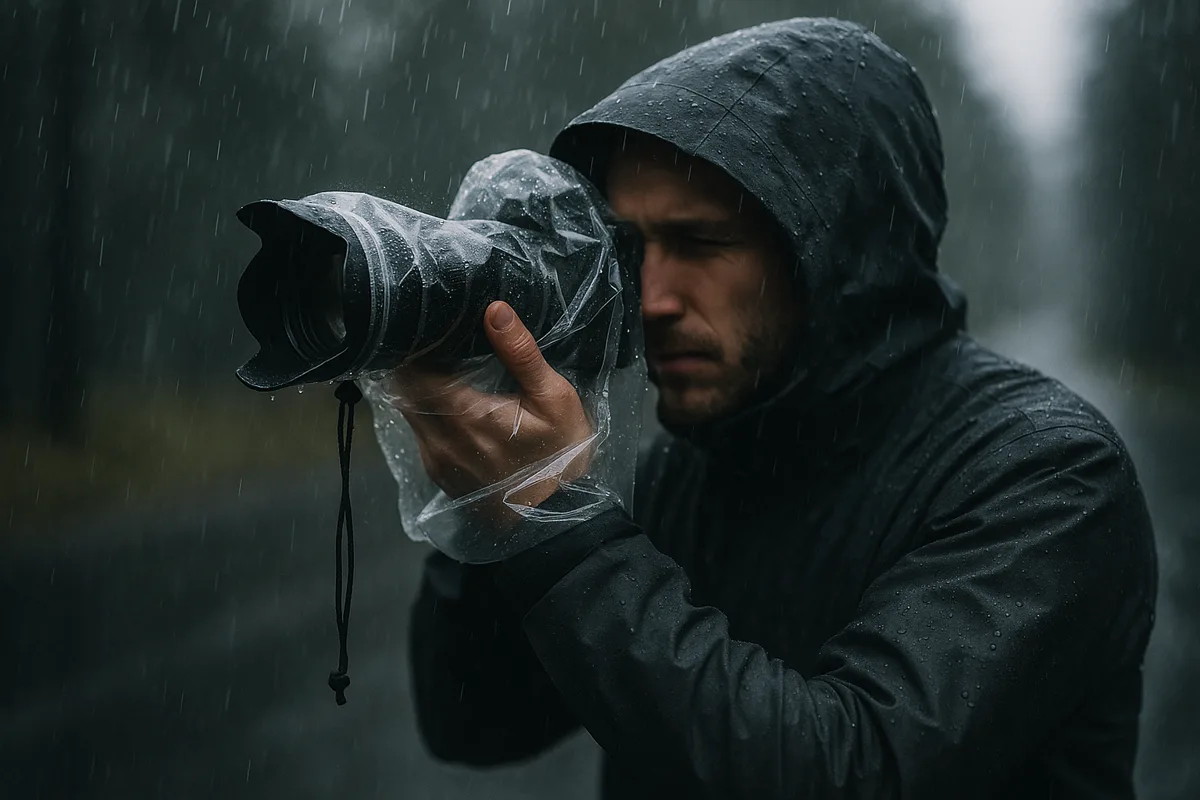
From the buyers who tested it in the wild
Our own field test lines up with what verified buyers report across 214 reviews and 8,000+ covers sold — including the honest note about creasing.
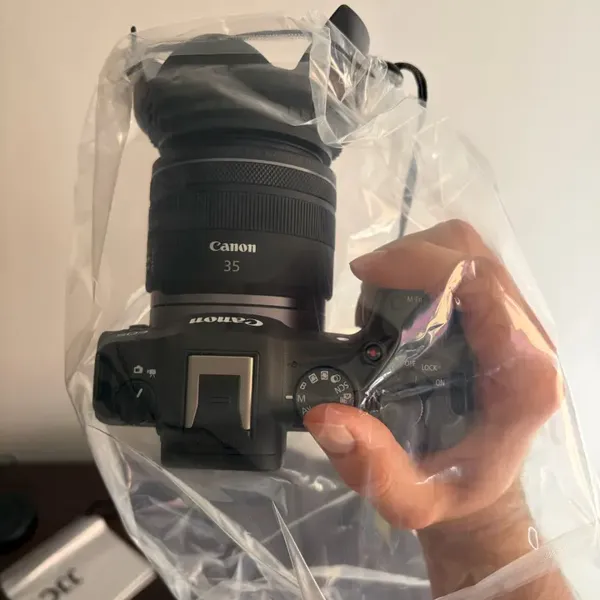
"Tested it with a Canon R7 in heavy rain — loved it. The camera stayed completely dry."
— Verified buyer, Peru
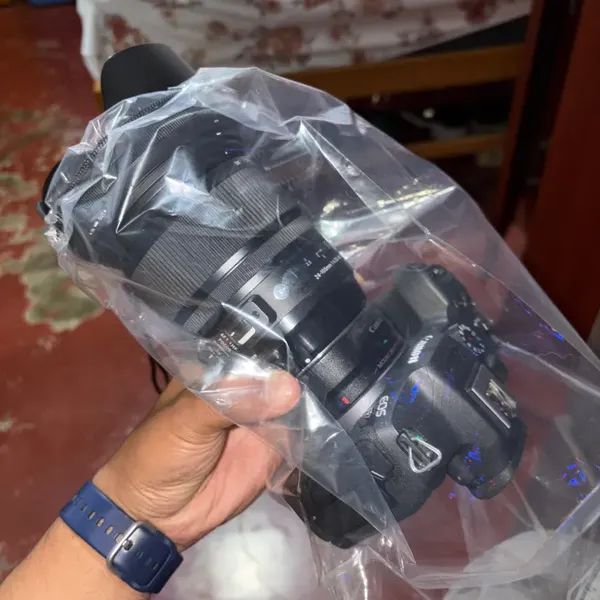
"Perfect — but the plastic creases quickly. Still does the job of keeping the rain out."
— Verified buyer, France
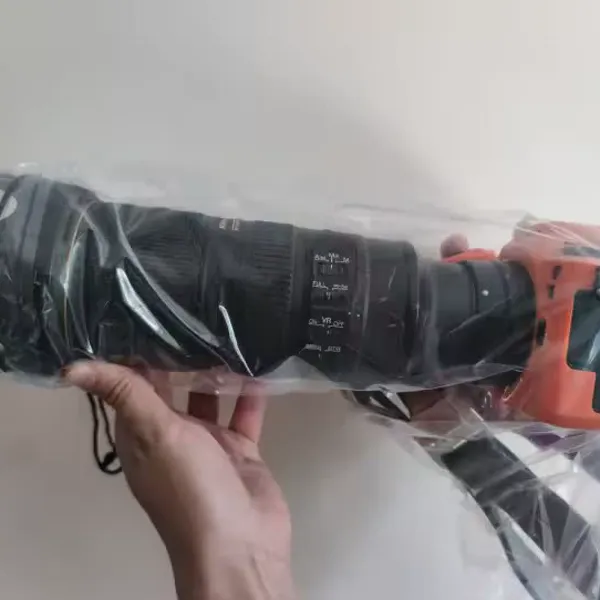
"Very good quality. Protects the camera and I can still see every button through it."
— Verified buyer, UK
Unedited photos from verified buyers. Meet the tester on our about page, or send us a scenario on contact.
Free shipping · 4.6 ★ from 214 verified buyers · 30-day money-back guarantee
How we test — FAQ
Who actually tests the covers?
Every cover is field-tested by Elias Corwin, an outdoor and wildlife photographer with twelve years behind the lens. He shoots in the weather, not in a lab, so the checks reflect how the cover behaves on a real body in real rain rather than a spec sheet.
How do you know if water gets in?
We shoot full sessions in genuine downpours and, between them, we mount the cover on a body wrapped in colour-indicating paper and run it under a garden hose from several angles. Any water that reaches the paper shows up instantly, so we can tell exactly where and how fast moisture creeps in around the lens sleeve and eyepiece.
Do you test more than one camera brand?
Yes. We fit the cover on Canon, Sony and Nikon bodies — the Canon EOS R, a Sony A7 and A6 series, and a Nikon Z — each with a different lens length, so the drawstring sleeve and the eyepiece opening are checked against several real combinations rather than one flattering match.
Do you mention the downsides?
We do. The clear plastic wrinkles and creases easily, and we say so on every page. Creasing is cosmetic and does not stop the cover working, but we would rather you hear it from us than be surprised. Every order is backed by a 30-day money-back guarantee.